
Biryani is one of the most loved dishes in the UK. Whether enjoyed as a comforting weekend takeaway or served at celebrations, it holds a special place in the hearts of food lovers everywhere. But not all biryanis are the same.
If you’ve ever wondered what makes Malabar Biryani different from a “regular” biryani you might find at most Indian takeaways, you’re not alone. At Red Chilliez, we specialise in authentic Kerala flavours — and Malabar Biryani is one of the true stars of South Indian cuisine.
So what exactly sets it apart?
Let’s explore.
The Origins: A Coastal Kerala Legacy
Malabar Biryani comes from the Malabar region of Kerala, a coastal area in South India known for its rich spice trade history. For centuries, Kerala was a major hub for traders from Arabia, Persia and Europe. These cultural influences shaped the region’s cuisine, creating something entirely unique.
Unlike many North Indian biryanis, Malabar Biryani evolved with coastal ingredients, aromatic spices and subtle layers of flavour rather than heavy gravies.
It’s refined, fragrant and beautifully balanced.
The Rice: A Key Difference
One of the most noticeable differences lies in the rice itself.
Most “regular” biryanis in the UK use long-grain basmati rice. Malabar Biryani, however, traditionally uses a short-grain rice called Jeerakasala (also known as Kaima rice).
This rice differs from basmati in several ways:
- The grains are shorter and plumper.
- The aroma is subtle but distinctive.
- It absorbs flavours effectively during cooking.
- The texture is softer and less elongated than basmati.
The result is a biryani where every spoonful is infused with spice and aroma, rather than feeling like separate layers of rice and curry
The Cooking Method: Layered to Perfection
Malabar Biryani is prepared using a traditional technique known as “dum” cooking.
This method involves:
- Preparing a richly spiced meat or chicken base.
- Par-cooking the rice separately.
- Layering the rice and masala together.
- Sealing the pot and slow-cooking it so the flavours steam and blend.
This slow cooking process allows the spices, herbs and meat juices to infuse the rice naturally.
The difference?
Instead of being overly saucy or oily, Malabar Biryani is fragrant, moist and perfectly balanced.
The Spice Profile: Aromatic, Not Overpowering
Many people assume biryani means intense heat. But Malabar Biryani is not about excessive spice — it’s about depth and aroma.
Kerala cuisine is known as the “Spice Coast” of India, and its biryani reflects that heritage.
Key ingredients often include:
- Fresh curry leaves
- Green chillies (for warmth rather than heat)
- Whole spices such as cloves, cardamom and cinnamon
- Black pepper
- Fried onions
- Fresh coriander and mint
Rather than being heavy or overly creamy, the flavour is layered and elegant. You taste the spices individually, yet they blend harmoniously.
The Influence of Coconut
Kerala cuisine is famous for its use of coconut — whether as oil, milk or freshly grated flesh.
While Malabar Biryani itself is not drenched in coconut milk like some Kerala curries, the regional cooking style often incorporates subtle coconut elements in the masala or side dishes.
This adds:
- Gentle sweetness
- Smooth texture
- A uniquely South Indian character
It’s this subtle regional influence that makes Malabar Biryani stand apart from North Indian or Hyderabadi variations.
The Protein: Quality and Balance
Malabar Biryani is most commonly prepared with:
- Chicken
- Mutton
- Sometimes seafood in coastal areas
Unlike some versions where the meat is heavily spiced to the point of overpowering the rice, Malabar Biryani maintains balance. The meat is tender, flavourful and perfectly integrated into the rice layers.
Every bite delivers both rice and protein together — not one dominating the other.
Less Greasy, More Refined
Another noticeable difference is texture.
Many standard takeaway biryanis can feel:
- Oily
- Overly coloured
- Heavy
Malabar Biryani is lighter and more refined. The flavours come from slow cooking and spice infusion rather than artificial colouring or excessive oil.
It’s comforting, yet elegant.
The Garnish: A Signature Finish
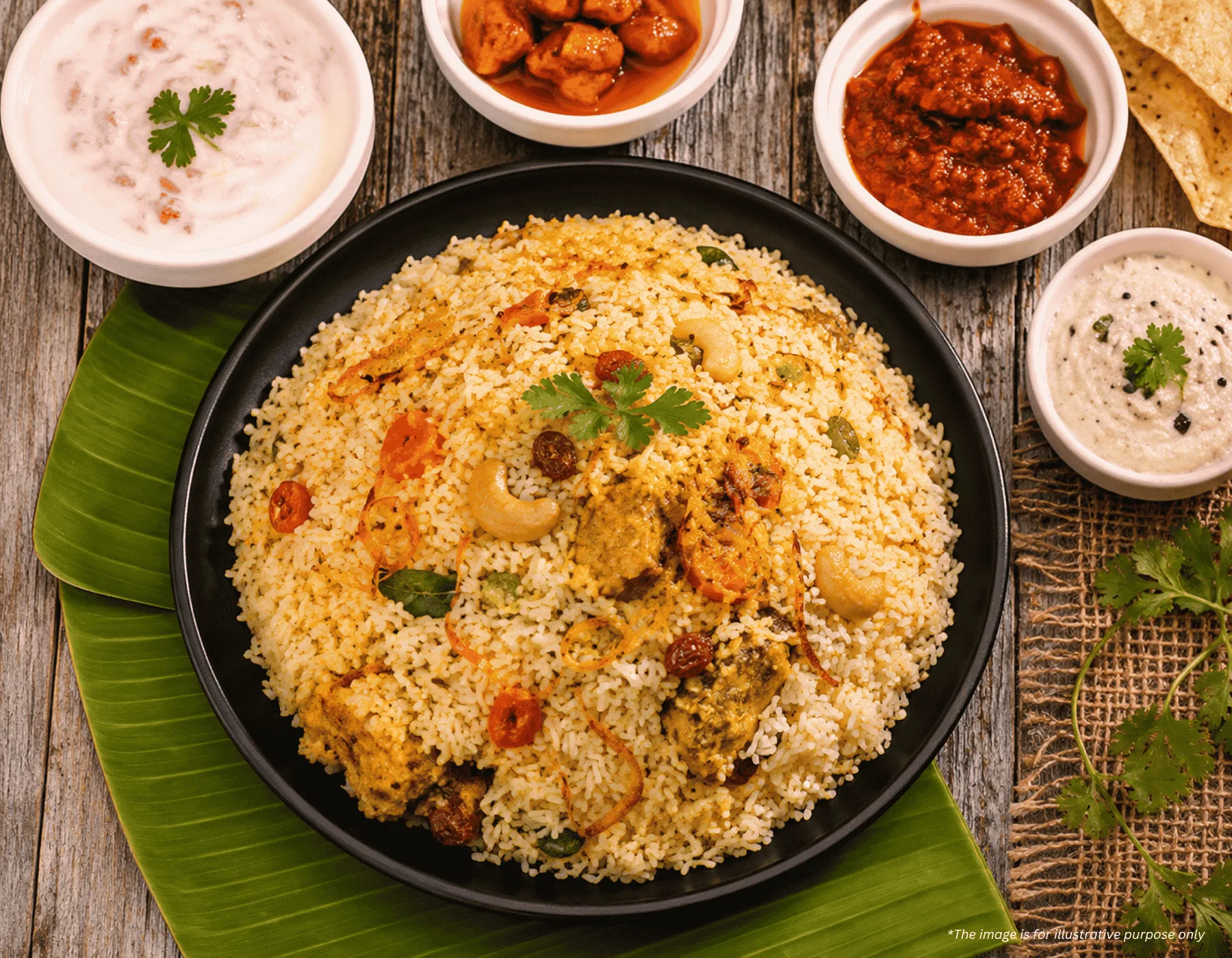
Malabar Biryani is traditionally topped with:
- Golden fried onions
- Cashew nuts
- Raisins
This sweet-savory contrast is distinctive to Kerala-style biryani. The raisins add a gentle sweetness that complements the aromatic spices beautifully.
It’s a small detail — but one that makes a big difference.
How It Differs from Other Popular Biryani Styles
To understand it better, here’s a quick comparison:
North Indian Biryani
- Uses long basmati rice
- Often richer and heavier
- May include creamy gravies
Hyderabadi Biryani
- Known for bold spice and heat
- Can be fiery
- Strong use of saffron and chilli
Malabar Biryani
- Uses short-grain aromatic rice
- Balanced, fragrant and layered
- Less oily
- Subtle sweetness from garnish
- Strong coastal spice influence
Each style is delicious in its own way — but Malabar Biryani offers something truly distinctive.
Why Malabar Biryani Is Growing in Popularity in the UK
British diners are becoming more adventurous and curious about regional Indian cuisine. Instead of ordering generic “chicken biryani”, more people now want authenticity.
Malabar Biryani appeals because it:
- Offers something different from typical takeaway options
- Feels both indulgent and refined
- Showcases authentic Kerala flavours
- Is perfect for sharing
It’s a dish that tells a story — of tradition, coastal heritage and careful cooking.
The Perfect Dish for Sharing
Biryani has always been a celebration dish in South India. It’s served at weddings, family gatherings and festivals.
Its layered presentation and generous portions make it ideal for sharing with friends and family.
Pair it with:
- Cooling raita
- Pickles for contrast
- A fresh salad
And you have a complete, satisfying meal.
Experience Authentic Malabar Biryani
At Red Chilliez, we take pride in offering authentic South Indian and Kerala cuisine. Our Malabar Biryani reflects traditional cooking methods, carefully selected spices and a commitment to flavour balance.
If you’re used to ordering standard takeaway biryani, trying Malabar Biryani could completely change your expectations.
It’s not just rice and curry layered together. It’s Aromatic, Carefully cooked, Beautifully balanced, Rich in heritage
Whether you prefer chicken or another variation, Malabar Biryani delivers a depth of flavour that stands apart from ordinary options.
So, what makes Malabar Biryani different from regular biryani?
Primarily, it is:
- The use of short-grain Jeerakasala rice instead of basmati
- A balanced and aromatic spice profile
- The inclusion of fried onions, cashews and raisins
- Its roots in Kerala’s coastal culinary traditions
While all biryanis share common foundations, regional differences give each version its own character. Malabar Biryani stands as a clear example of how geography and history shape flavour.
For anyone interested in exploring regional Indian cuisine, understanding these distinctions offers a deeper appreciation of what is on the plate — and the traditions behind it. If you’re looking to experience the rich, authentic flavours of Malabar Biryani for yourself, visit Red Chilliez in Southend-on-Sea and enjoy a freshly prepared taste of Kerala.
Book your table today or order online to savour one of South India’s most loved dishes.